 Blog home
Engagement and retention are more important than ever. With 45% of physicians aged 55 or older, a population that is increasingly older, and healthcare demand rising, estimates indicate a shortage of 86,000 physicians by 2036. Organizations with engaged and loyal physicians will outperform those without them.
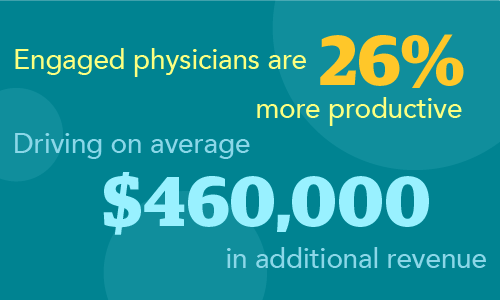
An engaged physician is 26% more productive, driving, on average, an extra $460,000 annually in patient revenue per physician. Add the cost of filling a vacancy vs. the unmeasured benefit of referrals, and an engaged physician has a major impact on the productivity and profitability of your business.
Be more successful: Strategic recruitment in a competitive market
Here are six ways to increase clinician engagement and improve retention at your healthcare facilities:
1. Get out of your office
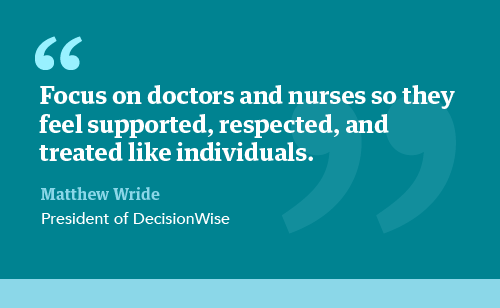
One of the most effective ways a leader can affect clinician engagement in their organization is to leave the office and talk to their people. “I would be out of my office and talking to the frontline providers as much as possible,” says author and organizational culture expert Michael Pacanowsky. “I would make sure my hospital or clinic really focused on doctors and nurses so they feel supported, respected, and treated like individuals.” Taking time to listen lets clinicians know you’re serious about improving workplace conditions and quality of care in your organization.
2. Identify areas of excellence and replicate them
Every organization has some areas that simply function better than others. When it comes to clinician engagement, look for the positive deviants, where things are going well. “Study your strengths, not your weaknesses,” says Matthew Wride, president of DecisionWise, an employee experience firm. “Find out why a particular hospital is off the charts with its engagement scores and spend time there; you’ll find the insights you need.” Then work to replicate those conditions throughout your organization.
Align to engage: The secret to long-term physician retention
3. Offer more autonomy
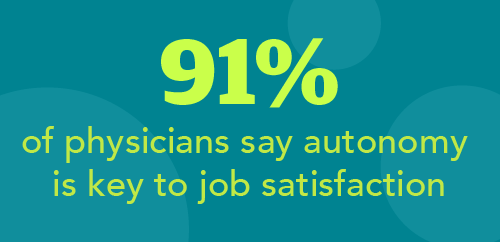
CHG Healthcare’s 2025 physician sentiment survey found that physicians identified autonomy as the most important aspect of their job satisfaction at 91%, but only 59% expressed satisfaction with the autonomy they were given.
Scott Polenz, principal consultant at CHG Advisory Services, identifies three areas where healthcare organizations can consider offering physicians more autonomy:
- Clinical
- Schedule
- Strategic
Physicians want to be able to make the decisions that are best for their patients, as well as how often and for how long they see patients, to offer the best care. They also want to take the lead in deciding how they want to grow their practice, with administrators helping them achieve those goals rather than just directing them.
4. Get creative with flexibility
The physician landscape is changing, and more physicians are opting out of traditional practice models. Options for flexibility can include four-day workweeks, job sharing, part-time physicians, telehealth, and hybrid models.
Polenz suggests creating an internal float pool where physicians who want to work more can fill in gaps in the organization, allowing other physicians flexibility with their schedules.
Polenz also encourages organizations to be proactive with locums. He suggests notifying physicians that you plan to hire a locum physician so they can take time off and mentally break from work. “It’s going to cost money, but what’s more important is the physician’s long-term well-being and preventing burnout,” Polenz says.
5. Focus on professional development and growth
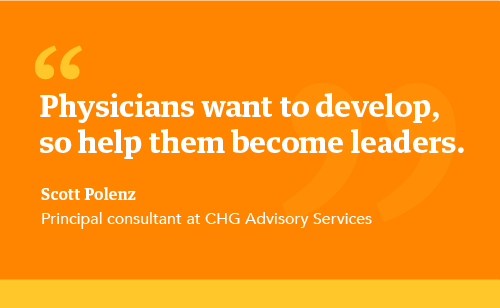
Studies show that restricted career growth and limited training opportunities lead to low job satisfaction. “Physicians want to develop, so help them become leaders,” Polenz says.
A CHG study found that 18% of physicians changed careers for more opportunities for professional growth. Professional development and advancement can include education, leadership training, mentorship, and career planning.
Physicians are lifelong learners, and organizations can foster their quest for knowledge by offering educational opportunities such as CME courses, conferences, workshops, and research opportunities. In addition, mentorship programs not only help onboarding physicians, but mentors as well with their leadership development.
Organizations that show a commitment to physician growth improve job satisfaction and loyalty.
6. Offer support for physicians
CHG’s physician sentiment survey found that 50% of physicians say they spend too much time on documentation, and 34% say they spend too much time on administrative tasks. Support and training physicians receive to eliminate unnecessary work increases engagement.
Polenz suggests that an Office of Physician and APP Relations can help identify and reduce inefficiencies and frustrations. If physicians have an easily accessible contact to whom they can turn for answers and resources, it can alleviate stress and administrative burden. Support staff and resources for well-being can also help alleviate some of the burden placed on physicians, so they are better engaged with their patients.
Get the full results: 2025 physician sentiment survey
The benefits of better engagement
ImpImproving provider engagement is one of the most effective ways to increase retention. Engaged providers are more likely to produce better patient outcomes, report higher well-being, and contribute to lower costs overall.
“Having a formal retention plan in place saves money,” says Polenz. “It’s foundational to the health of an organization.”
Connect with a CHG Healthcare physician workforce strategist to discuss how we can help with your facility’s needs. Call 866.570.9920 or ecs.contact@chghealthcare.com to learn more.

